

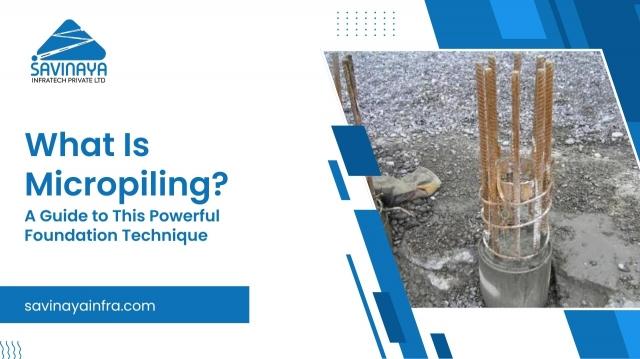
When construction projects face difficult soil conditions, restricted access, or the need to strengthen aging structures, traditional foundation methods often fall short. That's where Micropiling emerges as a cutting-edge alternative, offering reliability and versatility for even the most demanding sites.
What is Micropiling?
Micropiling is a specialized foundation technique that uses slender, high-strength piles—usually between 100mm and 300mm in diameter—drilled deep into the ground. These piles are reinforced with steel and bonded with high-grade grout, allowing them to transfer building loads to stable soil or rock layers far below the surface.
Because of its minimal vibration and noise, Micropiling is ideal for urban environments, sites with limited space, or projects near existing structures that require extra care.
Why Choose Micropile Construction?
Opting for micropile construction brings a host of benefits:
-
Low Disturbance: The process generates little noise and vibration, reducing the risk of damage to neighboring properties.
-
Exceptional Strength: Micropiles are engineered to bear heavy loads, making them suitable for both new builds and foundation repairs.
-
Adaptability: This method can be tailored to a wide variety of soil types and space constraints.
-
Efficient Upgrades: Perfect for reinforcing or underpinning older foundations with minimal excavation.
Types of Micropiles
Micropiling isn't a one-size-fits-all solution. There are several types to address different engineering needs:
-
Friction Micropiles: Rely on the interaction between the pile surface and surrounding soil to distribute loads.
-
End-Bearing Micropiles: Transfer loads directly to a solid layer deep underground.
-
Tension Micropiles: Designed to counteract uplift forces, especially useful in seismic or high-wind zones.
How Does Micropile Construction Work?
The micropile construction process typically follows these steps:
-
Site Analysis: Engineers assess the ground conditions and determine the best approach.
-
Drilling: Specialized equipment drills narrow shafts to the required depth, even through tough ground.
-
Reinforcement: Steel rods or casings are inserted into the drilled holes for added strength.
-
Grouting: High-strength grout is pumped in to secure the pile and ensure a strong bond with the surrounding soil.
-
Curing and Testing: The piles are left to harden and then tested to confirm their load-bearing capacity.
This method ensures a solid, long-lasting foundation, even in challenging environments.
Recommended Reads
Choosing the Right Rockfall Protection: Mesh, Barriers, and Fences Explained
Keeping Slopes Safe: Types, Benefits, and Best Practices for Rockfall Protection Systems
Soil Nailing and Geotechnical Design: A Solution for Stability
One of the key strengths of micropiling is its flexibility. Compact drilling rigs can access tight spaces, and piles can be installed vertically or at angles, depending on the project's requirements. This makes micropile construction a preferred choice for both new construction and the rehabilitation of existing structures.
What Affects the Cost of Micropiling?
The price of a micropiling foundation depends on factors such as:
-
Site accessibility and soil conditions
-
Pile depth and diameter
-
Materials and reinforcement used
-
Project-specific load requirements
While the initial investment may be higher than shallow foundations, micropiling often saves time and money in the long run by preventing structural issues and minimizing delays.
Choosing the Right Micropile Contractor
Selecting an experienced micropile contractor is crucial for project success. The right team will have:
-
Proven expertise in micropile construction and foundation stabilization
-
Experience with different micropile systems and soil types
-
Advanced equipment for efficient drilling and quality control
A skilled micropile contractor ensures your project is completed safely, on time, and within budget.
How Savinaya Infratech Supports Your Micropiling Needs ?
Savinaya Infratech stands out as a trusted partner for micropiling projects. Their services include:
-
Customized micropile foundation solutions for residential, commercial, and industrial sites
-
State-of-the-art installation, drilling, and grouting techniques
-
Transparent project timelines and pricing
-
In-house engineering support for complex challenges
-
A track record of success in both new builds and foundation reinforcement
Conclusion
Micropiling is a powerful, adaptable solution for projects where traditional foundations aren't feasible. Whether you're constructing a new building or strengthening an existing one, working with a reputable micropile contractor like Savinaya Infratech ensures your foundation is built to last. Reach out today to discover how micropile construction can enhance your next project.